
Field Guide — Permits · Updated September 4, 2026
Do You Need a Permit for HVAC, Electrical, or Plumbing Work in Cincinnati?
Do you need a permit for HVAC, electrical, or plumbing work in Cincinnati? Usually yes — and which counter issues it depends on whether your address is city, township, or suburb.
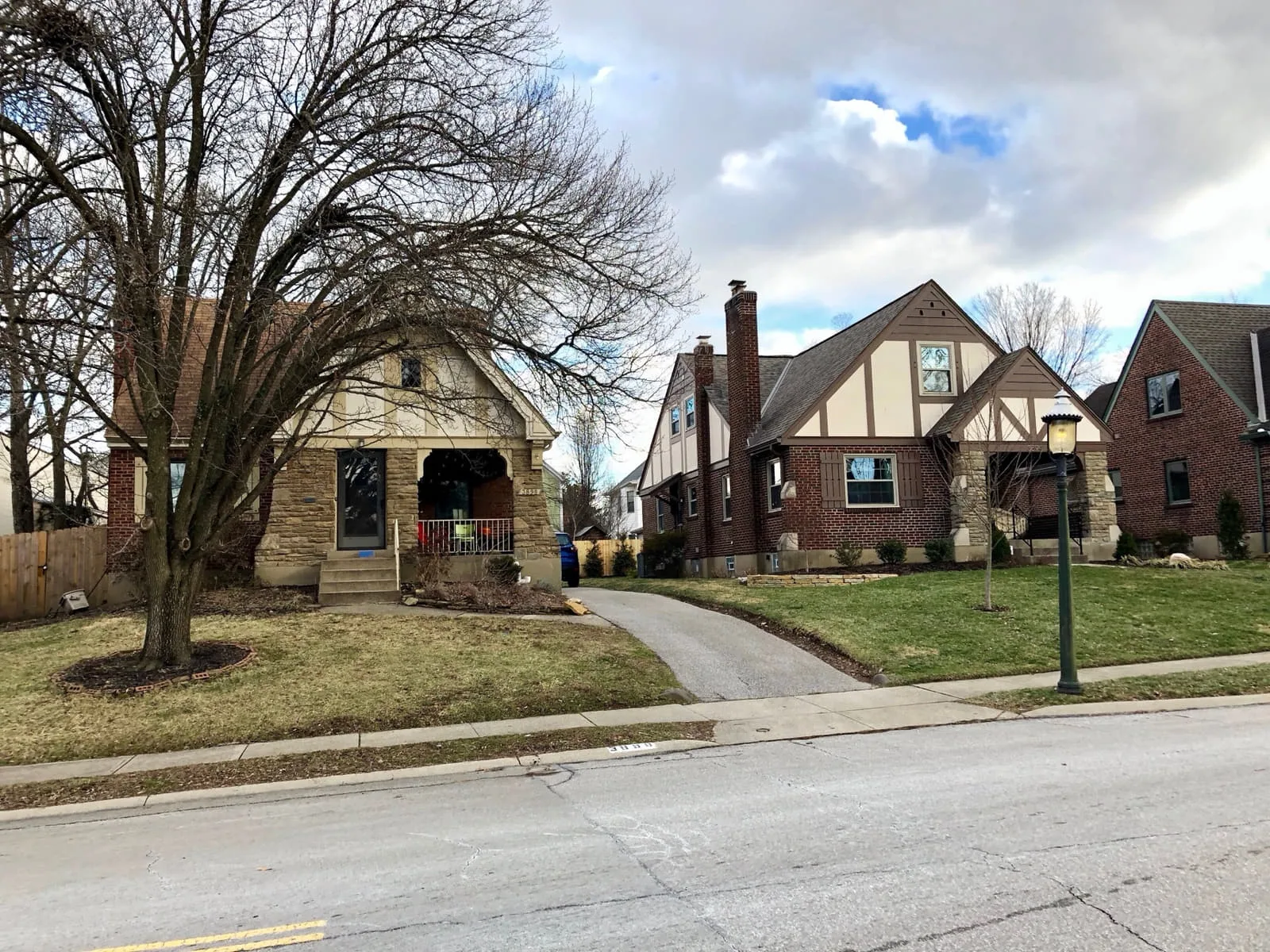
Warren LeMay · CC0 1.0 (public domain dedication)

Do You Need a Permit for HVAC, Electrical, or Plumbing Work in Cincinnati?
Two questions decide it, and only one of them is about the work
Homeowners ask whether a job needs a permit as though the answer lived in the job. It does not. It lives in two places: what the building code calls the work, and which counter your address answers to.
The second question is the one that catches people out here. A furnace-and-water-heater job at a house in Anderson Township touches three separate agencies: the mechanical permit from Hamilton County, the plumbing permit from Hamilton County Public Health, and, if the work touches the outside, a zoning certificate from the township. Move that same house four miles into the city of Cincinnati and all three land on one department’s desk, with electrical handed to a private inspection firm under contract. Nothing about the furnace changed. The routing did.
Repair, alteration, new installation: the words the code turns on
The City of Cincinnati publishes a two-page worksheet, Permitting Requirements for Properties Constructed as Residential Structures of 1–4 Dwellings, that sorts every job into four subtypes. Learn these four words and most of the guesswork disappears:
- Repair — replaces substantial amounts of existing components, typically like for like, and in no way reconfigures the system or structure. Must still comply with current code.
- Alteration — alters but does not enlarge the system or structure. Rerouting piping, ductwork, or circuits is an alteration. So is removing a wall.
- Addition — expands an existing system, adds fixtures, or adds area.
- New — the work or structure does not presently exist.
Here is the trap. “Replacement in kind” is a real exemption in Cincinnati, but it applies to the building shell, not to the mechanical trades. Swap the shingles, siding, gutters, or windows on a one-, two-, or three-family house and you generally need no permit. Swap the furnace, water heater, or electrical panel and you do. The city’s worksheet lists HVAC fixtures, plumbing fixtures, and electrical work as permit-triggering under alteration/replacement, not only under new.
Trade by trade, inside Cincinnati city limits
- HVAC. A mechanical permit is required for HVAC fixtures and for ductwork, on new work, additions, and straight replacements alike. A condenser going back on an outside pad in a historic or urban design overlay district also needs the matching overlay certificate.
- Electrical. An electrical permit is required for added circuits, panel upgrades, generators, chargers, and battery installations. In roughly a quarter of Hamilton County's housing stock — 97,255 of 383,004 units were built in 1939 or earlier — a panel swap is rarely just a panel swap.
- Plumbing. A plumbing permit is required for fixture replacement and for interior or exterior piping.
- Water heaters. A plumbing permit is required, in the city and in the county alike. A water heater is a plumbing fixture, and replacement counts.
- Roofing. No permit for roof coverings only on a one-, two-, or three-family dwelling, provided the work involves no structural alteration and no more than two layers of roofing material. Four-dwelling structures always need a building permit.
- Decks. All freestanding decks require a building permit and a zoning certificate, new or altered. There is no small-deck exemption.
- Fences. A fence 6 feet or shorter needs a zoning certificate. Taller than 6 feet, it needs a building permit as well. Powered gates can pull in an electrical permit and, if the gate sits in the right-of-way, a Department of Transportation and Engineering permit.
- Driveways and aprons. New impervious surface greater than 800 square feet needs a building permit and zoning certificate. Separately, any sidewalk or driveway apron in the public right-of-way is a DOTE permit, not a Buildings and Inspections permit.
- Basement finishing. Drywall alone needs a building permit once the work exceeds minor maintenance, and the electrical, plumbing, and mechanical work inside the space each need their own permit. A finished basement with no permit history is the classic resale problem.
Two overlays sit on top of all of this. In the 1% chance floodplain, a floodplain development permit is required in addition. In a historic district, hillside overlay, or urban design overlay, the zoning certificate is replaced by a certificate of appropriateness or a certificate of design overlay compliance.
Who issues it: three different routings in one metro
Greater Cincinnati has no single permit counter. There are three patterns: the city of Cincinnati; the unincorporated townships, which route building permits to the county; and the incorporated suburbs, each running its own department and farming different trades out to different outside inspectors.
| Where the property is | Building permit counter | Trades that route elsewhere |
|---|---|---|
| City of Cincinnati | Department of Buildings & Inspections (building, mechanical, and plumbing) | Electrical permits, plan review, and inspections are outsourced by the city to Inspection Bureau, Inc. |
| Anderson, Colerain, Delhi, Green, Springfield, and Symmes townships | Hamilton County Planning + Development, Division of Buildings + Inspections (building and mechanical) | Electrical to Inspection Bureau, Inc.; plumbing to Hamilton County Public Health; zoning certificate from the local zoning authority first |
| Blue Ash | City of Blue Ash Community Development — one application covers building, electrical, mechanical, zoning, and sign | Plumbing to the Hamilton County General Health District |
| Sharonville | City of Sharonville Department of Community Development (building, zoning, heating and air conditioning) | Electrical inspection by National Inspection Corp.; plumbing by Hamilton County Public Health's Plumbing Department |
| Montgomery | City of Montgomery Community Development (building and zoning); plan review and on-site inspections by National Inspection Corporation | Plumbing to the Hamilton County General Health District |
| Madeira | City of Madeira Building & Zoning (building and mechanical; inspects footings, framing, and HVAC) | Electrical to Inspection Bureau, Inc.; plumbing to the Hamilton County General Health Department |
| Norwood | City of Norwood Building Department (building, zoning, and HVAC) | Electrical to Inspection Bureau, Inc.; plumbing to the Hamilton County Health Department Plumbing Division |
| Forest Park | City of Forest Park Building Department — separate building, HVAC, fire protection, and sign permits | Electrical to Inspection Bureau, Inc.; plumbing to the Hamilton County Health Department Plumbing Division |
| Springdale | City of Springdale Building Department — one application covers building, mechanical, electrical, fire protection, and zoning | Plumbing issued separately by the Hamilton County General Health District's Plumbing Department |
| Reading | City of Reading Building and Zoning; all building department operations, including plan review and inspections, contracted to XPEX | Plumbing to Hamilton County Public Health |
| Loveland | City of Loveland Building & Zoning (building, zoning, and mechanical) | Electrical to Inspection Bureau, Inc.; plumbing to Hamilton County Public Health |
In the townships, sequence matters as much as address: Hamilton County will not accept a building permit application until the local zoning authority has issued a zoning certificate. Green Township zoning is county-run except in the Northeast Green Township area, which the township administers under its own code, and Symmes Township zoning certificates are issued by the county under contract with the trustees. Since 18 February 2025, all Hamilton County Planning + Development permitting is fully digital through the ezTrak portal.
Emergencies do not waive the permit; they move the deadline
Hamilton County Public Health’s Plumbing Regulation 3-2025 treats replacement of a water heater, water line, or sanitary sewage piping as a plumbing emergency. Work may begin before the permit is issued — but the application must be submitted within 2 business days of the start of work, and if the work area has to be covered, the contractor or homeowner must file for an emergency inspection first. “It was an emergency” is not a permanent excuse.
The county’s list of work needing a plumbing permit is short and blunt: add or remodel a bathroom or kitchen; add or replace a sump pump or water heater; replace a toilet, sink, or shower valve; install a permanent whirlpool or hot tub; add or replace a dishwasher or garbage disposal; install a permanent irrigation system; install a yard hydrant. The stated exceptions are equally narrow — clearing a drain line without fracturing pipe, and replacing washers, faucets, and valves or repairing leaks where the piping to and from the fixture does not change. Under the fee schedule effective 1 March 2025, a water heater replacement permit costs $60.
How to check what was pulled on your own address
Permit history is a public record, and in Hamilton County it is unusually easy to search. Four free checks cover almost everything:
- For property inside the city of Cincinnati, search the CAGIS ezTrak records search by street number and street name, or by project or case number.
- For county-issued permits and current applications, use the CAGIS ezTrak portal.
- For plumbing outside the city, contact the Hamilton County Public Health Plumbing Division, which holds those records separately from any building department.
- Ask the contractor, in writing, which permit they will pull and from which agency. A company that works in your jurisdiction regularly will answer immediately; hesitation on this question is worth noticing.
Two cautions. A missing record is not always missing work: a permit filed under a prior address format and work that genuinely needed no permit both look like silence. And a permit issued but never finalled is worse than no permit, because it is documented evidence of an inspection that never happened.
When unpermitted work surfaces at resale
Ohio requires the seller of residential property to complete the Residential Property Disclosure Form under ORC 5302.30, disclosing material defects within the seller’s actual knowledge. A buyer who receives that form after signing the purchase agreement may rescind — but only within 3 business days of receiving it, and the right expires at the earlier of 30 days after the seller accepted the offer, or the closing date.
In practice, unpermitted work rarely kills a sale outright. A home inspector finds it, it becomes a credit demand, and then it becomes a permit application filed under time pressure by whoever has the least leverage. In Cincinnati that application carries an investigation fee: under the Buildings and Inspections fee schedule effective 1 July 2026, the investigation fee for a project commenced without a permit equals the applicable permit fee and is charged in addition to it, capped at $1,695. Each re-inspection after a second failed inspection costs $169. And if the work is concealed — drywalled basement, buried supply line, ceiling below new ductwork — someone has to open it so the inspector can see it.
The homeowner permit, and why mechanical work is the wrong place to use it
Ohio does let an owner-occupant act as their own contractor, within limits that are narrower than most people assume, and the limits differ by agency.
In the city of Cincinnati, an owner may pull the building, mechanical, plumbing, and electrical permits on a single-dwelling structure, provided the property is owner-occupied, is not corporation-owned, and the owner occupies it for 1 year after completion. That latitude shrinks fast as units are added: on a two-dwelling structure the plumbing permit already requires a professional contractor; on a three-dwelling structure plumbing and electrical both do; on a four-dwelling structure, which falls under the Ohio Building Code rather than the Residential Code of Ohio, all four trades do.
Outside the city, Hamilton County Public Health issues a homeowner’s plumbing permit only if you own and live in the single-family residence where the work will be done, continue to live there for 1 year afterward, complete the work without the paid assistance of others, and live within Hamilton County Public Health’s jurisdiction — the county outside those cities that run their own health districts. Anyone helping you must themselves be registered and bonded with the health district. Failing any of those conditions voids the permit.
The scope is real. Using it on mechanical work is usually a bad idea, for reasons unrelated to your competence:
- You take on liability a contractor would otherwise carry. A contracting company doing this work carries its own liability cover for it. Pulling the permit yourself takes that off the job, and puts it on you.
- Gas and combustion venting are unforgiving. Furnace and water heater work involves fuel gas, venting, and combustion air. The inspection is the only independent check that any of it was done right.
- It shows up when you sell. The permit history a buyer's agent pulls will show an owner permit rather than a contractor, on exactly the systems a home inspector scrutinizes hardest.
- Warranties. Many manufacturers condition equipment warranty coverage on professional installation. Check the terms before you decide.
If you hire out, the checks are quick. Ask which permit the contractor will pull and from which agency, and get the answer in the written proposal rather than over the phone. Ask who schedules the inspection and who meets the inspector. And ask what happens to the price if the inspector fails something — a contractor who has been through it will have an answer ready. Our guide to choosing a contractor walks through the rest of the conversation, and the Cincinnati directory and Cincinnati HVAC listings are where to find the companies working here.
What this site is, and what it is not. Local & Licensed is an independent local directory. We do not inspect work or vouch for workmanship, and a listing is not a recommendation. Placement is never sold. More on how it works is on the about page.
Common questions
Do I need a permit to replace a furnace in Cincinnati?
Yes. The City of Cincinnati requires a mechanical permit for HVAC fixtures and ductwork on new installations, additions, and straight replacements alike. Like-for-like replacement is not an exemption for mechanical work inside the city. If the outdoor unit sits in a historic or urban design overlay district, the matching overlay certificate is required as well.
Do I need a permit to replace a water heater in Hamilton County?
Yes. Hamilton County Public Health requires a plumbing permit and inspection for new and replacement water heaters outside the City of Cincinnati. Its regulation treats a water heater replacement as an emergency, so work may start first, but the permit application must be filed within 2 business days. The replacement fee is $60.
Does reroofing a house in Cincinnati need a permit?
Generally no. For one-, two-, and three-family dwellings, the city does not require a permit for roof coverings only, provided there is no structural alteration and no more than two layers of roofing material. Four-dwelling structures always need a building permit. Historic, hillside, urban design, and floodplain overlays add their own certificates.
Who issues my permit if I live in a township instead of the city?
Hamilton County Planning and Development, Division of Buildings and Inspections issues building and mechanical permits in the unincorporated townships. Your township issues the zoning certificate first, and the county will not accept the building permit application without it. Electrical goes to Inspection Bureau, Inc., and plumbing to Hamilton County Public Health.
Can a homeowner pull their own permit in Ohio?
Sometimes. In Cincinnati an owner-occupant may pull building, mechanical, plumbing, and electrical permits on a single-dwelling structure that is not corporation-owned, if they occupy it for 1 year afterward. Hamilton County Public Health issues homeowner plumbing permits under similar conditions outside the city. Both require you to do the work yourself.
Sources
Everything above traces to a public record. These are the ones it traces to — all free, all open to you without us.