
Field Guide — Costs · Updated August 18, 2026
What HVAC Replacement Costs in Cincinnati (2026)
Installed ranges for furnaces, air conditioners, and heat pumps across Greater Cincinnati, what actually drives a quote up or down, and how to read a written proposal.
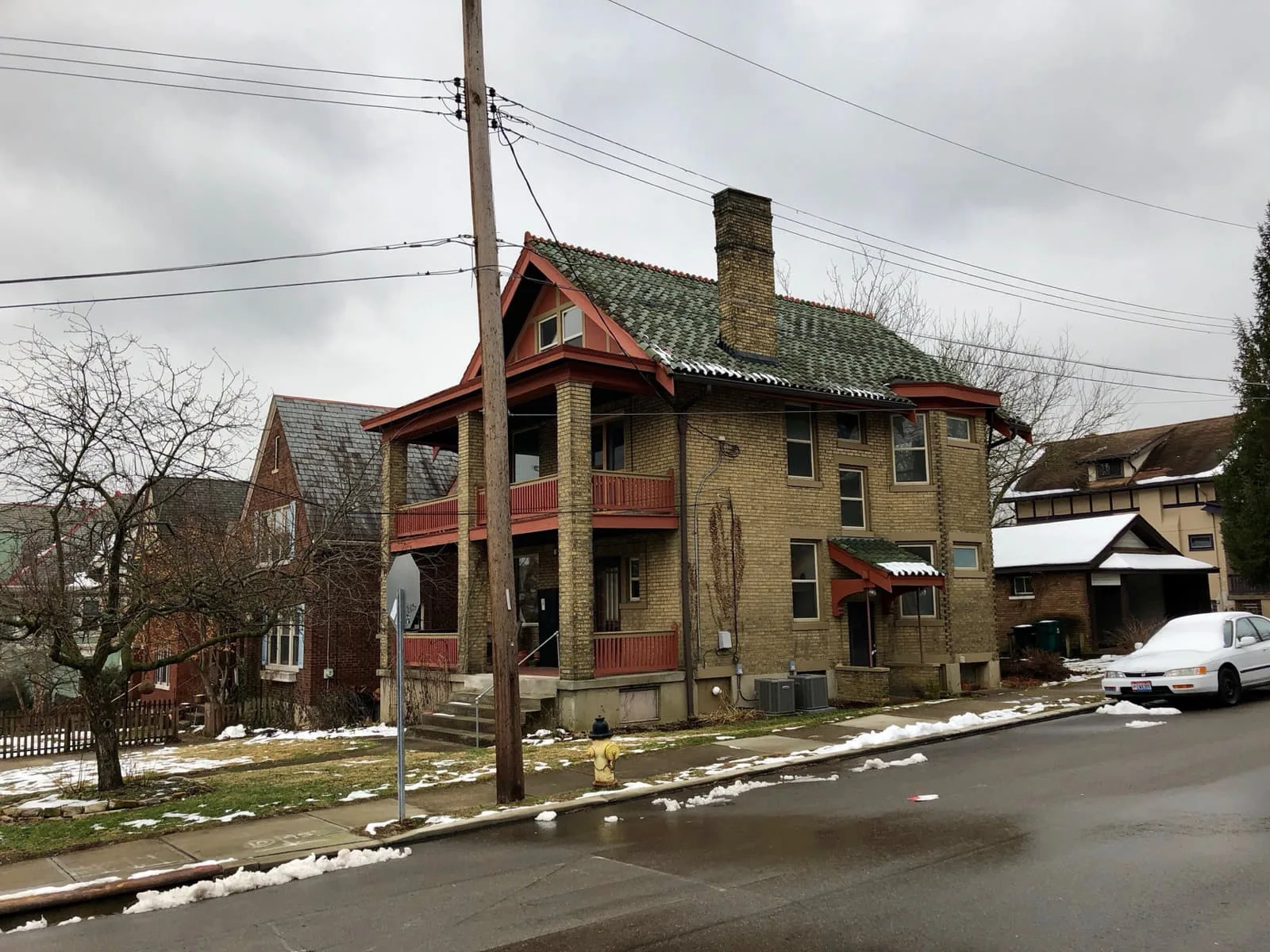
Warren LeMay · CC0 1.0 (public domain dedication)
.jpg)
What HVAC Replacement Costs in Cincinnati (2026)
Three bids, one house, a $9,000 spread
Homeowners in Greater Cincinnati routinely collect three quotes for the same replacement and get numbers $9,000 apart. That is not because one company is greedy. It is because the equipment is often only a third to a half of the price, and the rest is a set of decisions each contractor made silently: whether to run new venting, add a return, touch the electrical panel, pull a permit, and how long they will warrant their own labor.
Everything below is a range observed in this market, not a quote. Nobody can price your house from a web page. The only real number is a written, itemized proposal from a contractor who has been inside your house and looked at what is there, and the point of this guide is to let you read that proposal properly.
What the ranges look like
These are installed prices for a single-family home of roughly 1,200 to 2,400 square feet, including removal of the old equipment and a mechanical permit, and excluding the ductwork, electrical, and venting work priced in the second table below.
| Scope of work | Range observed, installed | What moves it to the top of the range |
|---|---|---|
| 80% AFUE single-stage gas furnace, like-for-like | $3,500–$6,500 | Existing chimney venting is reused, so little else changes |
| 96%+ AFUE two-stage gas furnace | $6,000–$10,500 | New PVC vent and intake, condensate drain, sometimes a chimney liner |
| 96%+ AFUE modulating furnace, variable-speed blower | $8,500–$14,000 | Communicating controls and a matched thermostat |
| Air conditioner only, 2–3 tons, matched indoor coil | $5,000–$9,000 | Coil access, line set condition, new disconnect and pad |
| Air conditioner, two-stage or variable capacity | $8,000–$14,000 | Equipment cost and control complexity |
| Furnace and air conditioner replaced together | $9,500–$17,000 | The only reliable way to get a properly matched pair |
| Ducted air-source heat pump with air handler | $9,000–$16,000 | Electric backup heat and the panel capacity it needs |
| Ducted cold-climate heat pump, variable capacity | $13,000–$25,000 | Equipment cost, larger circuit, longer commissioning |
| Dual fuel: cold-climate heat pump plus 96% furnace | $14,000–$26,000 | Two heat sources and one control strategy to tune |
| Ductless mini-split, one indoor head | $4,500–$8,500 | Line-hide, wall penetration, dedicated electrical run |
| Each additional mini-split zone | $2,500–$5,000 | Head type and refrigerant line routing |
80 percent or 96 percent: the venting decides it
The federal floor for a non-weatherized gas furnace is still 80.0% AFUE. That is set at 10 CFR 430.32(e)(1)(ii) and applies to units manufactured on or after 19 November 2015 and before 18 December 2028. From 18 December 2028, the same rule raises the floor to 95.0% AFUE, which would end production of non-condensing furnaces. That date is real but not settled: the Supreme Court vacated the D.C. Circuit’s decision upholding the rule on 8 June 2026 and sent the case back for reconsideration. Do not let a salesperson tell you an 80% furnace is illegal today. It is not.
The honest argument for condensing is climate, not law. Under NOAA’s 1991–2020 normals, the airport at CVG records 4,892 annual heating degree days against 1,160 cooling degree days. Cincinnati is heating-dominated by roughly 4 to 1, so 16 points of AFUE is 16 points applied to the larger half of your energy bill.
The cost is in the plumbing of it. An 80% furnace vents into the existing masonry chimney. A 96% furnace vents through PVC out a sidewall and needs a condensate drain. In Hamilton County, where the median owner-occupied home was built in 1961 and 45.5% of the housing stock predates 1960, that change frequently orphans the gas water heater in a chimney now oversized for it, which means a liner. That is the line item that surprises people.
Single-stage, two-stage, variable
Staging is bought for comfort more than for efficiency. The summer design condition at CVG is 89 degrees F dry bulb with a 74 degree F coincident wet bulb. That wet-bulb number is the one that matters here: an oversized single-stage air conditioner satisfies the thermostat quickly, shuts off, and never runs long enough to pull the humidity out. The house reads cold and clammy at the same time.
Two-stage and variable-capacity equipment runs longer at lower output, which dehumidifies better and holds temperature more evenly. It also costs more to buy and more to repair, because inverter boards and communicating controls are expensive parts. Ohio’s code recognizes the difference directly: the sizing rule at OAC 4101:8-14-01, Section 1401.3, lets multi-stage and variable refrigerant flow equipment be sized outside standard Manual S capacities, provided the calculated loads fall inside the manufacturer’s published range.
Tonnage and SEER2, and what Ohio law actually requires
SEER2 replaced SEER on 1 January 2023 under a revised test procedure that measures performance against realistic duct static pressure. The industry calls Ohio part of the “North region,” but the regulation does not. 10 CFR 430.32(c) creates only a Southeast and a Southwest region, and Ohio is in neither, so the plain national minimum applies: 13.4 SEER2 for split-system air conditioners, and 14.3 SEER2 with 7.5 HSPF2 for split-system heat pumps. That national standard governs manufacture, not installation, so there is no legal obstacle to installing a 13.4 SEER2 condenser in Cincinnati. If you want more, you are buying it, not complying with it.
Tonnage is where money is actually wasted. One ton is 12,000 Btu per hour, and a square-footage rule of thumb is not a load calculation. Ohio requires equipment to be sized under ACCA Manual S based on loads calculated under ACCA Manual J. The 99% winter heating design temperature for CVG is 10 degrees F; Lunken, at a lower elevation, is listed at 12 degrees F, and the Hamilton, Ohio station at 5 degrees F. The ANSI/RESNET/ICC 301 county limits run colder still: Hamilton and Clermont at 5 degrees F, Warren at 3, Butler at 2. Ask which station and which design temperature your contractor sized to. A contractor who cannot answer has not done a load calculation.
Heat pumps at 10 degrees
A heat pump’s rated efficiency tells you almost nothing about how it behaves on the coldest morning of the year. Two numbers do. Under the ENERGY STAR heat pump specification version 6.2, revised February 2026, a certified split system must reach 15.2 SEER2, 11.0 EER2, and 7.8 HSPF2. To carry the separate Cold Climate mark, a ducted split system must reach 15.2 SEER2 and 8.1 HSPF2 and demonstrate a COP of at least 1.75 at 5 degrees F while still delivering at least 70% of its 47 degree F heating capacity at that temperature, verified through a controls verification procedure.
Set that against a 10 degree F design temperature and a county limit of 5 degrees F. A heat pump without cold-climate performance will hand the job to electric resistance strips in exactly the hours you care about, and strip heat is both expensive to run and demanding of your electrical service. That is why dual fuel — a cold-climate heat pump with a gas furnace as the backup instead of strips — is common on Cincinnati proposals, and why the switchover temperature written into the control settings is worth asking about.
Budget without the federal credit
The Section 25C Energy Efficient Home Improvement Credit, which paid up to $2,000 toward a qualifying heat pump, is over. The IRS is explicit that the credit cannot be claimed for property placed in service after 31 December 2025; it was terminated by the reconciliation act signed on 4 July 2025. Any 2026 proposal that still shows a $2,000 federal credit as a deduction from your price is either out of date or deliberately misleading, and you should treat it as a data point about the company. Utility rebates change independently — confirm any rebate on your own utility’s website before you accept it as part of a price.
What turns a swap into a project
| Additional work | Range observed |
|---|---|
| Duct modification or partial replacement | $1,500–$8,000 |
| Adding return-air capacity | $600–$2,500 |
| Electrical service upgrade to 200 amps | $2,000–$5,000 |
| New 240-volt circuit and disconnect | $600–$1,800 |
| Chimney liner for an orphaned water heater | $800–$2,500 |
| Gas line resizing or new run | $400–$1,500 |
| Condensate pump and drain | $200–$700 |
| Refrigerant line set replacement | $700–$2,000 |
| Mechanical permit and inspection | $120–$250 |
Three of those deserve explanation. Ducts: a trunk-and-branch system installed in 1961 for a 100,000 Btu furnace and no air conditioning is usually short on return air, and a new variable-speed blower will simply announce that fact loudly. Electrical: the National Electrical Code sets the minimum service for a one-family dwelling at 100 amperes, and in a county where 25.4% of housing predates 1940, a heat pump with strip heat can exceed what the panel has left. In the City of Cincinnati the electrical permit is not issued by the city at all; electrical permitting and inspection are contracted to Inspection Bureau, Inc. Refrigerant: since 1 January 2025, new residential air conditioners and heat pumps must be manufactured with a refrigerant under a 700 global warming potential, under 40 CFR part 84, which in practice means R-454B or R-32 rather than R-410A. The “just swap the outdoor unit” replacement is largely finished.
Permits cost little and tell you a lot
In the City of Cincinnati, the Department of Buildings & Inspections is blunt: heating, ventilating, air conditioning, fuel-burning, and related devices require permits for installation or replacement. Its fee schedule effective 1 July 2026 lists HVAC replacement in one- to three-family projects at $118 for the first unit plus $48 for each additional unit, with a new residential installation at a $2,000 valuation starting at $106. Surcharges are added on top: 3% technology, 1% training, 1% financial recovery, and a 5% planning surcharge on HVAC permits.
In the unincorporated townships — Anderson, Colerain, Delhi, Green, Springfield, Symmes — the mechanical permit comes from Hamilton County Planning + Development, Division of Buildings + Inspections, not the township. Zoning approval is a separate step, and in Symmes and most of Green it is the county that handles that too. The county’s 2026 schedule lists a residential mechanical addition or replacement for heating, air conditioning, or a gas line with an up-front fee of $131.15, or $139.02 including the technology fee and state surcharge, plus a $32.46 certificate of completion. Blue Ash, Sharonville, Madeira, Norwood, Springdale, Forest Park, Montgomery, and Loveland issue their own mechanical permits.
So the permit is $120 to $250 on a job costing thousands. A contractor who says permits are unnecessary on a changeout is telling you they intend to avoid an inspection, and it is the cheapest possible signal to act on. Ask, early, which permit they will pull and from which agency — the answer should be immediate. Our Cincinnati HVAC directory lists the companies working in this market, and the guide to choosing a contractor covers the rest of what to ask before you sign.
What a written proposal has to contain
- Model numbers for the outdoor unit, indoor coil or air handler, and furnace, plus the AHRI certified reference number for that exact combination
- The load calculation, naming the design temperatures and the weather station used
- Refrigerant type, and whether the existing line set is reused, flushed, or replaced
- Venting material, route, and termination point, with combustion air addressed
- Every duct modification, with external static pressure measured before and after
- Electrical scope, and who pulls the electrical permit
- A permit line item naming the issuing authority
- Labor warranty term stated separately from the manufacturer's parts warranty, and who registers the equipment
- Commissioning method: how refrigerant charge and airflow will be verified at startup
- Removal and disposal of the old equipment
- A total price and payment schedule, not a monthly payment
Why the cheapest bid is usually the most expensive outcome
A bid gets cheap by removing things, and the removals are predictable. No load calculation, so the equipment is sized off the old nameplate and inherits a 30-year-old mistake. The line set is reused because assessing it takes time. No return is added, so a $12,000 variable-speed system runs against static pressure it was never designed for and delivers single-stage comfort. No permit is pulled, so no inspector sees the vent termination. The warranty is never registered, so 10-year parts coverage quietly becomes 5.
None of that shows up on the invoice. It shows up in year 3, when the compressor fails and the parts warranty is short, and in every gas bill in between. Compare bids on scope, not on the bottom line, and make the cheap bidder tell you in writing what the expensive bidder is including that they are not.
About these numbers. The ranges on this page are observations of the Greater Cincinnati market in 2026, not quotes, not averages, and not offers. Prices move with equipment availability, refrigerant supply, and the condition of your particular house. Fees, code citations, and design temperatures are cited to the issuing agency and were checked in August 2026; verify anything that will change your decision at the source.
Local & Licensed is a local directory. We do not inspect work, price jobs, or vouch for workmanship, and placement in our directory is never sold. More on how it works is on the about page.
Common questions
How much does it cost to replace a furnace in Cincinnati in 2026?
Ranges observed in Greater Cincinnati run roughly $3,500 to $6,500 for an 80% AFUE single-stage gas furnace installed like-for-like, $6,000 to $10,500 for a 96% AFUE two-stage unit, and $8,500 to $14,000 for a modulating furnace with a variable-speed blower. Ductwork, chimney lining, and electrical work are priced separately. Only a written itemized proposal gives you a real number.
Do you need a permit to replace a furnace or air conditioner in Cincinnati?
Yes. The City of Cincinnati requires permits to install or replace heating, ventilating, air conditioning, and fuel-burning devices. In the unincorporated townships, Hamilton County Buildings and Inspections issues the mechanical permit instead. The fee is small, roughly $120 to $250 including the certificate of completion, so a contractor skipping the permit is avoiding the inspection, not the cost.
Is the federal heat pump tax credit still available in 2026?
No. The Section 25C Energy Efficient Home Improvement Credit, worth up to $2,000 for a qualifying heat pump, cannot be claimed for property placed in service after 31 December 2025. It was terminated by the reconciliation act signed on 4 July 2025. Any 2026 proposal that still deducts a $2,000 federal credit from your price is wrong.
Do heat pumps work in Cincinnati winters?
Cold-climate models do. The 99% winter design temperature at CVG is 10 degrees F, and the county design limits used by raters run to 5 degrees F. An ENERGY STAR Cold Climate heat pump must hold a coefficient of performance of at least 1.75 at 5 degrees F and still deliver 70% of its 47-degree capacity. Standard models fall back to costly electric strip heat.
What SEER2 rating is required in Ohio?
The federal minimum is 13.4 SEER2 for split-system air conditioners and 14.3 SEER2 with 7.5 HSPF2 for split-system heat pumps, for equipment manufactured on or after 1 January 2023. The stricter regional standards in 10 CFR 430.32 apply only to the Southeast and Southwest, and Ohio is in neither. A higher rating here is a choice, not a legal requirement.
Sources
Everything above traces to a public record. These are the ones it traces to — all free, all open to you without us.
- Electronic Code of Federal Regulations
- U.S. Department of Energy
- Ohio Revised Code and Administrative Code
- RESNET / ANSI 301 design conditions
- NOAA National Centers for Environmental Information
- U.S. Census Bureau — American Community Survey
- ENERGY STAR product specifications
- Internal Revenue Service
- U.S. Environmental Protection Agency